



November 11, 2025 – Reading time: 10 minutes
Artificial intelligence (AI) is on the rise since 2022 with ChatGPT as its most prominent example, with its current iteration GPT-5 released in August 2025. The fact that it’s still lasting after several years and growing shows that we’re dealing here with no mere fluke or overhyped trend (looking at the graveyard of NFTs), but something already too big to fail. But like with every big trend with high potential there are bad actors, controversies and misconceptions. With ChatGPT already mentioned, this article covers currently rising AI in form of language models and generative AI and where their limitations lie. The first part describes limitations of hard- and software, why only now AI has become possible, and how reliable autogenerated answers are. Afterwards we’ll compare AI with speech assistants and highlight the potential in modern devices. Lastly intended limits will be explained and why they make sense. But first, we need to get on the same page what we understand by the currently overused buzzword AI.
What is AI? – Language models and generative AI
In public discourse, “AI” usually refers to large language models and generative AI systems. Strictly speaking, AI as a whole is much broader, but these technologies dominate current discussions. No tutorial or manual is needed to give orders the AI understands, instead you are using human-like communication – making the interaction with large language models feel so “magical”. It can get over a thousand different phrases meaning the same instruction in the front end (chat interface) and it still manages to produce a close-to-identical output from the back end.
The language model (or rather, its frontend) listens and understands user requests. Part of it also keeps track of an ongoing discussion where the user inquires further in a current topic without repeating every time what the topic is. When asked “What is the highest mountain in France?”, the AI should be able to understand the follow-up question “How many visitors where there last year?”.
Another side of AI, the generative AI, is responsible for proper responses. Be it a text-based answer like a recipe for tomato soup or a generated image of a cat in a spacesuit. Let’s now dive deeper into the first significant limitations, which explain why AI as such is only possible now, despite depictions in movies since over half a century.

Hardware limitations
The code behind the language-model-part of AIs involves a matrix with over 12,000 dimensions to group words, so dynamic sentences from the user can be understood (precisely 12,288 as largest known dimension size of the model davinci for GPT-3 according to Wikipedia). Alone with the number of dimensions and the high complexity of natural language it’s easy to imagine how hardware has posed a restriction up until now in terms of data storage and processing speed. Titans like Googles Gemini or OpenAIs GPT 5.0 still require a connection to their data centers (which are still mandatory alone to function in their large scale), where they also gather and analyze user data like any search engine. But there are also solutions which work offline on desktop PCs like Llama or GPT4All, although not as elaborated as already mentioned counterparts.
One could still argue that language models were possible decades ago, albeit though only on slow working servers the size of entire buildings. Even if that were true, the same cannot be said for the generative AI for a simple reason: pre-training.
Training limitations
When you ask AI how to tomato soup or where a train stops between two cities, it doesn’t search related databases like a detective would. AI-systems have been fed with gigantic amounts of data, (so-called web-crawling, already practiced by search engines). For example, Wikipedia alone provides AI with extensive general knowledge, including all recorded history. However, Wikipedia, despite being extensive, would be a mere fraction of what AI consumes as part of its pre-training. When scanning this data, it not only processes semantic knowledge, but also sentence structures, grammar and patterns such as topic-relations, in order to provide users with intelligent and human-like answers.
To create images in response to text requests, it first needs to know what things look like, which requires references. For example, millions or even billions of cat images are used to train AI to qualify as an image generator for felines, recognizing patterns and types in response to the request “cat” alone.
In the topic of AI-pre-training we find at least two further limitations of AI. The first is the reason, why generative AI wasn’t possible decades ago, regardless of the algorithm used. As described, for the pre-training a massive amount of usable data is needed, obviously from the internet. But Wikipedia, for example, came into existence , and back then it started small, reaching only 2005 over a million of articles.
Social media and smartphones caused the societal breakthrough to fill the internet with billions of images of all things. The lack of both 20 years ago alone made image-targeted web-crawling insufficient to train image generator like Stable Diffusion. And the lack of quantity and quality of captions (text descriptions attached to image files) back then made image-web-crawling already impossible in the first place. Captions were already introduced with HTML 2.0 around 1995, mainly to enable search engines, but also as a feature for blind people (where the PC would read out loud the caption description).
Reliability & hallucinations
The second limitation of AI stemming from its training is more relevant to its present-day use: the unreliability of AI answers, which are mere autocompletions. It basically predicts how a sentence or conversation continues based on its patterns. Everyone recognizes the quote from Neil Armstrong “That’s one small step for man, one giant leap forÔǪ” and knows how it ends. AI works in a similar way. While this was improved with the GPT 5.0 version, ChatGPT previously struggled with geographic requests, like where a train stops between two cities, or what the seven wonders of the world are. Even now, there’s a good chance of getting mere estimations – hallucinations – as answers on professional topics, which turn out to be completely made up. For example, when for code snippets or entire scripts for help with programming. I need to check whether the code actually runs error-free without any made-up commands, which gets even worse for less common programming languages.
AI vs Speech Assistants
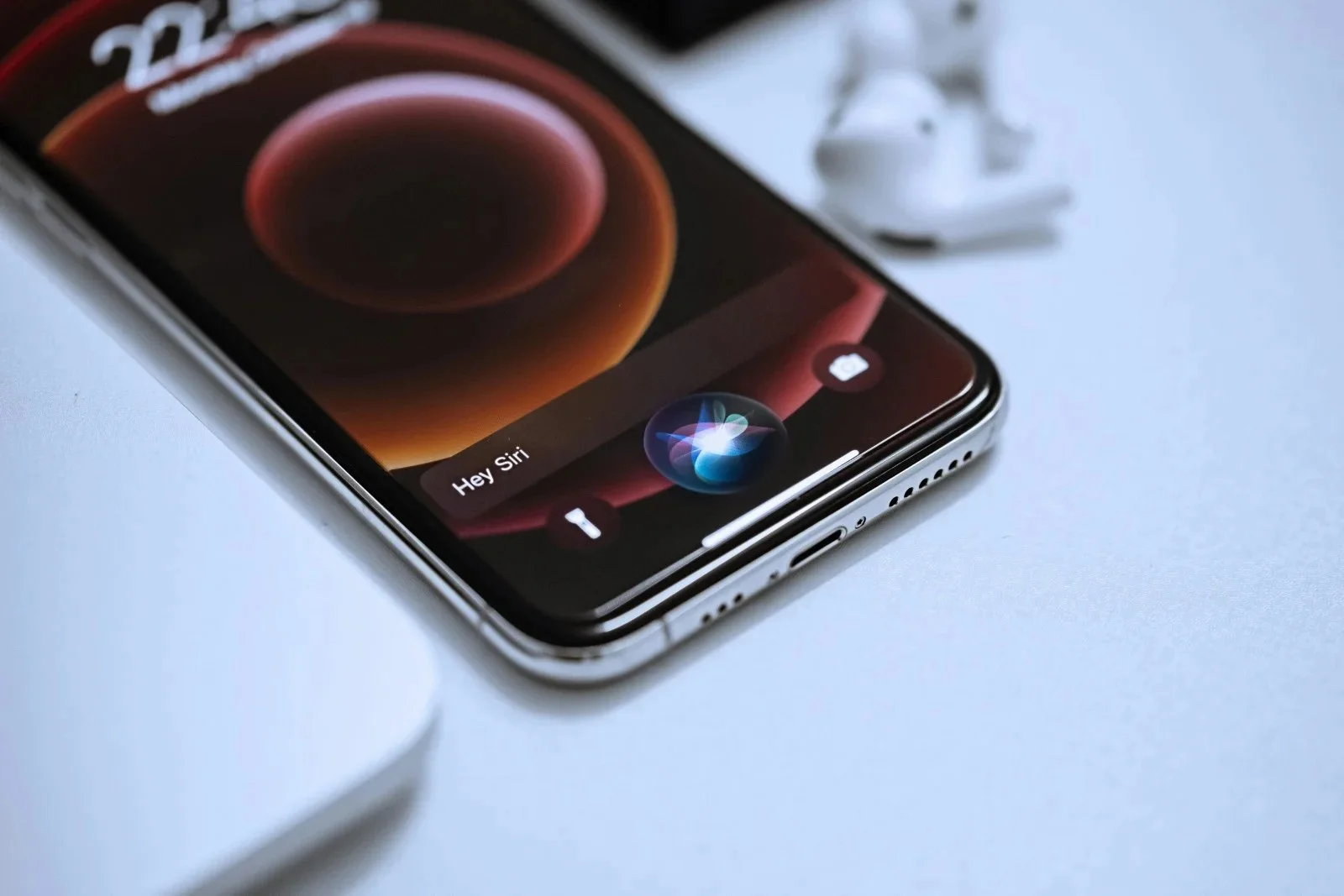
Now that we have covered Large Language Models and Generative AI under the banner of “AI”, as well as the initial limitations relating to hardware and research reliability, we can confidently distinguish between what constitutes AI and what does not. Famous speech assistants for mobile devices and smart homes such as Alexa, Siri and Google Assistant are not AI. They are simply speech assistants and pale compared to AI, they accept only predefined commands. Most of their functions could work offline. When activating flight-mode on the iPhone, Siri can still tell the time or play downloaded songs upon voice command.
On the other hand, there is AI in the form of ChatGPT from Open AI, Grok from X/Twitter, and Gemini from Google. Google’s Gemini is a stark contrast to most of the other tech giants which stumble in frantic panic to catch up in the AI race. Granted, Google has a nearly balance-breaking advantage – owning the largest video platform YouTube and the most-visited website “google.com” with its infrastructure, it has the ideal feeding ground to train AI unlike anyone else. Elon Musk’s Grok might be no mere copy of ChatGPT, but it’s no more than an alternative at the end of the day.
Limits in current progress
AI as described so far doesn’t have to be limited to a mere Chatbot when there’s so much more potential with modern devices, specifically to replace or upgrade already mentioned speech assistants. A present case would be Alexa, of which Amazon began releasing an updated version “Alexa +”, supported by generative AI, at the beginning of 2025. Currently still only in the USA, a release in Europe will likely follow next year. The current base model of Alexa would be considered outdated already, already in terms of listening and understanding words correctly. With Alexas AI update still restricted to the USA, Amazon might be late joining with its own AI after Microsoft and Google. Nonetheless Amazon plays a large role for these and other companies, being the main provider of the required infrastructure with AI-specific GPUs through Amazon Web Services. In fact, there is still an ongoing shortage of such GPUs (not to be mistaken with graphics-cards for gaming) with the still-rising investment in AI across the market.
Microsoft shows a much more visible strategy for AI. Just this year they pledged to invest $80 billion in AI. This much money doesn’t come out of nowhere, but from mass-cancelation of projects across departments. Just in July this year there where around 9000 layoffs, raising the total number in Microsoft 2025 to 15,000. It’s a strong indicator of how strongly Microsoft’s board believes AI to be too big to fail.
So far, Microsoft’s AI initiative runs under the label of “Microsoft Copilot”. At first, it seems like a ChatGPT clone when you open the Copilot app. And it partly is. But it can also scan through your PC when requested and find certain images or other files.
Copilot is also integrated across the Office 365 apps. There you’ll find new features enabled by generative AI such as rewriting text with typos removed or in a friendly and professional tone already in Word alone, in addition to summaries or generation of text. Editing tables in Excel via a Copilot Chatbot feature also becomes possible.
We want to highlight the chat-interface-element here, which stands out when you compare Microsoft’s Copilot to Apples AI-initiative “Apple Intelligence”. During our research, we were surprised how far ahead Microsoft is compared to Apple with just a year and before investing $80 billion. Microsoft Copilot was announced 2023 and rolled out for the public in January 2024. Late 2024 Apple announced Apple Intelligence, to be implemented in the newest generation of devices like the iPhone 16. The problem was that Apple set unrealistic expectations ahead of the actual release, advertising features like a Siri upgrade that surpassed what Microsoft or even Google had to offer. Commercials showing Siri replying to requests like “Siri, who was the guy I met at that cafe 3 months ago?”. The release of Apple Intelligence turned out to be underwhelming, with advertised features missing and delayed even to this date.
While large developments of AI are still to be expected, there’s already a noticeable disparity of progress between bigger competitors in this race.
Intended limits
So far, we have dived into natural limitations of current AI, where it’s only a matter of time until these limitations have been resolved due to technological progress. But with the described mechanics behind AI, and the increasing popularity and variety of usage, abuse of this technology is inevitable followed by regulations.
Most public image-generators prohibit obscene images, such as nudity or gore. Otherwise, could create fake nude images of each other using deepfake technology and take cyberbullying to a whole new level. We could delve much deeper into the darker side of “obscene” content, but the reasoning behind restrictions on AI should be clear.
Image-generators have also restrictions on public individuals and trademarks. Just imagine what chaos deepfakes of politicians could cause during an election. And regarding intellectual properties – The company Midjourney allowed to create AI-generated images of famous IPs, such as Disney characters, for a long time. The resulting lawsuit, filed in June 2025 and still ongoing as of November 2025, should come as no surprise. Disney’s lawyers argue that since Midjourney enables AI generated images of Disney characters under their subscription-based business model, that they indirectly profit from Disney properties without permission or paying compensation. Disney is only mentioned here as a famous example, the general practice of generating images explicitly depicting intellectual property is at least doubtful from an ethics perspective.
The lawsuits premise is to crystallize the border between copyright versus fair use, and another example, where with arising new technology laws need to adapt or set precedents.
Copyright restrictions are not exclusive to the image generator but can also be found in the chat interface of AI. AI can’t quote an entire chapter of a copyright-protected book. Here’s the interesting part: the AI can be trained with and “knows” the entire content of such books but wouldn’t reveal it so openly that it would threaten sales and risk a lawsuit. You can ask AI, from which book a certain quote originates, or for verses from the bible.
Of course, these restrictions don’t apply to literature in the public domain, like the first Sherlock Holmes novel “A Study in Scarlet”. You can ask for the first 1000 words or chapters from that book, and AI can lay it out for you, word for word.
As of November 2025, a restriction, that’s still in the works, is preventing AI from promoting real life harm, especially self-harm or suicide. This is a difficult topic to approach, and there are already several ongoing lawsuits in the USA where teenagers who used AI companions committed suicide, and their parents blamed the AI. Now, it’s still not clear whether AI can actually take blame in these cases, especially given the so far provided context and text-exchanges. Any related court cases are still open and ongoing.
AI companies already pledged to implement safeguards, but it’s difficult to differentiate for example between objective information and promotion of suicide. It’s even more difficult if an AI is supposed to provide roleplay as a fictional character.
In Europe, the Directive (EU) 2024/2853 would already hold AI companies accountable for such cases. The directive includes a wide range of AI usages, not only chatbots but medical or other industrial applications which use deep learning. The main point here is that AIs such as Gemini (Google) or Chat GPT (OpenAI) would make their providers liable, should they provide unsafe/false instructions that lead to real life harm. This can range from promoting harm on someone’s health or property damage, to false chemical or repair instructions causing accidents.
Conclusion
There is no doubt that the mentioned limitations of AI will be further pushed over the coming years. Not only in industrial applications, but also for private usage like social media. Content creation through text prompts alone made a huge leap since the beginning of 2025, spearheaded by AI video generators like Googles Veo 3, now including sound. Doesn’t sound like much, promoting generating videos with sound and finally over a minute of length as revolutionary, but measured by AI standards it is. In ten years, entire movies generated by AI through a text prompt might be possible.
The future of intended limits on the other hand remains uncertain and will to a large part be determined in court cases or by lawmakers. More people will be fascinated and even become emotionally dependent on AI as a partner, preferring it to humans, which will invite more controversy. And not all copyright owners will welcome the more frequent usage of AI in their industry, putting it under more scrutiny and demanding assurances to . This doesn’t stop at images or fictional characters but also includes voices. Just this year a remaster of old Tomb Raider games got released (Tomb Raider IV-VI Remastered), where part of Lara Crofts French voice lines was generated by AI without the original voice actor’s permission. Players quickly noticed the new wooden recordings, brought attention to it, and the original French voice of Lara Croft took legal actions against the studio behind the remaster.
The rise of AI as promising technology represents a new gold rush for the coming years, with its competitors seeing the benefits outweighing the risks manyfold. While we’ve covered mostly large language models and generative AI, it’s the fundamental technology behind them – deep learning – that will be the evolving driver. Not merely speaking/writing or drawing pictures like humans but already making neural connections of information like humans.
With that being said, if you want to know more about possible business applications of deep learning, please reach out to Marc Großerüschkamp from INVENSITY.
Author
 Charles Neuberger
Associate Consultant

Contact person
- Dr. Marc Großerüschkamp
Head of Software & Data Technologies

Resources
Learn more
Artificial Intelligence
Software Engineering
Artificial Intelligence

Cybersecurity